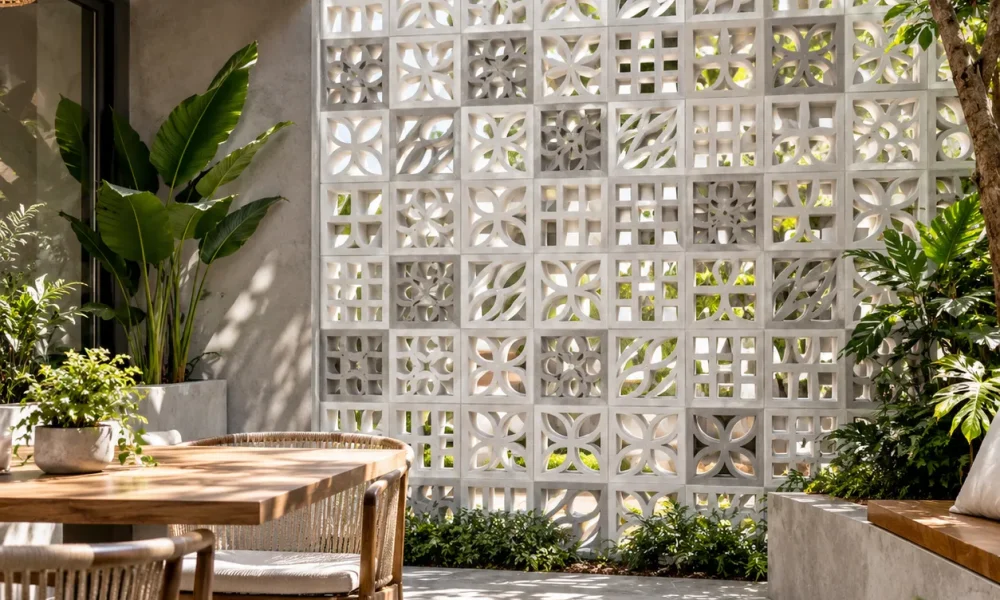
Breeze blocks are increasingly considered for decorative walls, garden screens, partitions and architectural features in residential and commercial spaces.
Their distinctive patterned openings make them an attractive option for projects that aim to combine decorative design with a more open architectural appearance.
However, proper breeze block installation is just as important as choosing the right pattern.
Whether you are planning a garden feature wall, patio partition, decorative fence or interior screen, understanding the installation requirements before construction begins can help reduce avoidable mistakes, material wastage and project delays.
In this guide, Breeze Blocks Malaysia by VIETTILES Sdn Bhd shares important considerations for planning and installing cement breeze block walls in Malaysia.
Before starting construction, identify the intended purpose and location of your breeze block wall.
Different applications may require different installation methods, support arrangements and construction considerations.
Indoor breeze blocks are commonly considered for:
For indoor applications, consider the existing floor structure, wall dimensions and how the installation will connect to surrounding building elements.
Outdoor breeze block applications may include:
Outdoor installations require additional attention to weather exposure, drainage, stability and appropriate structural support.
Important: A decorative breeze block wall should not automatically be treated as a load-bearing wall. Structural suitability, anchorage and reinforcement must be assessed by a qualified professional where required.
The first step in planning a successful breeze block wall is selecting a suitable design.
Different patterns create different visual effects when arranged across a larger surface.
For example, geometric designs may complement modern architecture, while nature-inspired patterns may suit garden features and outdoor decorative screens.
Before confirming your selection, consider:
VIETTILES Sdn Bhd offers a selection of handmade cement breeze blocks in white and grey, including geometric, nature-inspired and artistic patterns.
Accurate measurements help you plan the layout, estimate materials and minimise unnecessary wastage.
Start by measuring the proposed wall’s width and height.
Then calculate the approximate wall area:
Wall Area (m²) = Width (m) × Height (m)
According to VIETTILES’ published product information, its standard cement breeze blocks measure approximately:
190 mm × 190 mm × 65 mm
The company also provides a general reference of approximately 25 pieces per square metre, subject to the intended joint spacing and installation arrangement.
Suppose you are planning a decorative wall measuring:
Using the reference of 25 blocks per square metre:
6 m² × 25 blocks = approximately 150 blocks
This is a preliminary estimate only.
The final quantity may vary due to mortar joint thickness, openings, cutting, edge details and the actual layout.
Discuss the final measurements with your contractor and allow for an appropriate wastage margin before ordering.
Before laying the first breeze block, ensure that the installation area is suitable for the proposed wall.
Proper preparation helps support accurate alignment and consistent workmanship.
The supporting surface should be assessed for stability, levelness and suitability for the intended wall.
A decorative screen installed on an existing floor may have different support requirements from an outdoor wall constructed on a new foundation.
Do not assume that an existing slab or surface can support the proposed wall without verification.
Depending on the installation method, commonly used tools and materials may include:
Additional materials may be required for reinforcement, anchorage or structural support.
Your contractor should confirm the appropriate materials and installation method for the selected blocks and site conditions.
One common mistake is beginning installation without first reviewing the complete pattern arrangement.
Breeze blocks often feature decorative designs that become more prominent when repeated across several rows and columns.
Before construction, arrange or draw the proposed pattern to understand how it will appear across the wall.
Consider the following:
Pattern direction: Some designs may produce different visual effects when rotated.
Pattern repetition: Check whether the design creates the intended appearance when repeated.
Joint spacing: Allow for consistent mortar joints according to the approved installation method.
Wall edges: Determine how the pattern will finish at corners, columns and adjoining surfaces.
Openings: Consider any planned gaps, access points or other architectural features.
A layout drawing can help homeowners and contractors confirm the design before permanent installation begins.
Cement breeze blocks are commonly installed using masonry methods, but the exact procedure depends on the product, wall design and site requirements.
VIETTILES’ existing installation guidance discusses preparation, wetting the blocks, mortar application and maintaining consistent joints.
Its published guidance references mortar joints of approximately 1–2 cm.
However, joint thickness and mortar specification should be confirmed for the actual project, rather than applied as a universal rule.
During installation, contractors should pay attention to:
The contractor should also determine whether block pre-wetting is appropriate based on the product condition and specified mortar system.
For best results, follow the supplier’s applicable product guidance and the project professional’s approved installation details.
Reinforcement and structural support are important considerations, particularly for taller, longer or exposed walls.
The appropriate arrangement depends on factors such as:
VIETTILES’ published installation information includes general guidance on reinforcement, beams and columns.
However, these references should not be treated as a universal structural design for every project.
A freestanding outdoor screen may have very different requirements from a small interior decorative partition.
For safety, reinforcement spacing, anchorage, columns, beams and foundations should be specified or verified by a qualified building professional where required.
Avoid constructing large or elevated breeze block walls based solely on general online installation instructions.
After the blocks have been installed, the wall requires appropriate curing and finishing according to the selected mortar system and construction method.
Proper curing helps the cement-based materials develop their intended properties.
VIETTILES’ existing installation guidance describes wet curing over a seven-day period.
However, the correct curing approach should be confirmed against the mortar manufacturer’s instructions, site conditions and the approved construction specification.
Before applying any finishing treatment, consider:
Avoid rushing the finishing process simply to meet a project completion date.
Understanding common mistakes can help homeowners and contractors plan more effectively.
Incorrect measurements or unplanned joint spacing can lead to shortages or unnecessary material wastage.
Recommendation: Prepare a layout drawing and confirm quantities before ordering.
A highly open design may not provide the expected privacy for a patio or boundary screen.
Recommendation: Compare patterns according to privacy, openness and appearance before purchasing.
A decorative wall still needs appropriate support and stability.
Recommendation: Have the proposed wall and its connections assessed by a qualified professional where required.
Uneven joints can affect the appearance of repeated breeze block patterns.
Recommendation: Use appropriate setting-out methods and check alignment throughout installation.
Insufficient curing or premature finishing can affect the quality of cement-based masonry work.
Recommendation: Follow the approved curing requirements before proceeding with subsequent work.
Selecting a suitable supplier is an important part of planning your breeze block installation.
Breeze Blocks Malaysia by VIETTILES Sdn Bhd specialises in supplying handmade cement breeze blocks and decorative cement tiles imported from Vietnam.
Its product collection includes white and grey decorative breeze blocks featuring a variety of geometric, nature-inspired and artistic patterns.
Whether you are planning a residential garden wall, interior partition, patio screen or commercial architectural feature, VIETTILES provides different designs for your consideration.
Explore the collection before finalising your project layout and material requirements.
Small decorative projects may appear straightforward, but masonry installation requires appropriate skills, tools and an understanding of structural support. Professional installation is recommended, particularly for outdoor, freestanding, tall or exposed walls.
VIETTILES publishes a general estimating reference of approximately 25 blocks per square metre for its standard breeze cement blocks. The final quantity depends on joint spacing and wall layout.
Some installations require reinforcement, anchorage, beams or columns. Requirements depend on the wall dimensions, location and structural conditions and should be assessed by a qualified professional.
Breeze blocks can be used in outdoor decorative applications, subject to suitable installation methods, structural support and exposure considerations.
Installation time depends on wall size, site preparation, pattern complexity, structural requirements and curing conditions. Ask your contractor to provide a project-specific schedule.
A successful breeze block installation begins long before the first block is laid.
Choosing a suitable pattern, preparing accurate measurements, planning the wall layout and confirming installation requirements are all important steps.
Whether you are planning a decorative feature wall, garden screen, patio partition or commercial architectural installation, selecting the right cement breeze blocks can help you achieve your intended design.
At Breeze Blocks Malaysia by VIETTILES Sdn Bhd, you can explore a variety of handmade cement breeze block designs for residential and commercial projects.